Friday, May 11, 2007

Introduction to Hibernate

Persistent data can be seen anywhere in an application. Managing persistent data is one of the few challenges that modern technologies/products are facing. A solution called Object-Relational Mapping (ORM) has gained major popularity over the past few years. ORM is a piece of software/product for the representation and conversion of data between the database and the object-oriented programming language. Hibernate is one such ORM solution and it is an open-source project.More>>

Sunday, April 15, 2007

Introduction to Java Persistence API(JPA)

Java Persistence API (JPA) provides POJO (Plain Old Java Object) standard and object relational mapping (OR mapping) for data persistence among applications. Persistence, which deals with storing and retrieving of application data, can now be programmed with Java Persistence API starting from EJB 3.0 as a result of JSR 220. This API has borrowed many of the concepts and standards from leading persistence frameworks like Toplink (from Oracle) and Hibernate (from JBoss). One of the great benefits of JPA is that it is an independent API and can nicely integrate with J2EE as well as J2SE applications.More>>

Report Reveals AJAX on the Rise

There are now 3.5 million AJAX developers worldwide, a 50 percent increase over the past year, based on results of a survey that will be released next week.

The survey, conducted by Santa Cruz, Calif.-based Evans Data Corp., will also reveal that nearly four out of five, or 78 percent, of AJAX applications are developed for the Web and nearly 40 percent are for server-centric applications such as databases, ERP, CRM, as well as rich Internet applications.More>>

Tuesday, April 03, 2007

What is new in Java 6.0 Collections API?

In this article Vidua Sagar will write about the new Collections APIs introduced in Java 6.0. Mustang has few interesting changes in the Collections APIs, one amoung them is the Deque. Deque is used for the Bi-Directional traversal. It has different implementations including BlockingDeque,ArrayDeque,etc. He will talk about the Deque and its various implementation, also few more changes in the Collectiona API in Java 6.0.More>>

The Java 6.0 Compiler API

One of the cool features available in Java 6.0 (Mustang) is the ‘Java Compiler API’. This API is a result of the JSR (Java Specification Request) 199 which proposes that there must be a standard way to compile java source files. The result of the JSR is the new ‘Java Compiler API’ and one can use this new feature to compile java source files from within java files. Previously developers were depending on the low-level issues like starting a process representing the javac.exe. Though this feature is not intended to every one, Editors or IDE (Integrated Development Environment) can make much use of this new feature for compiling Java source files in a better manner.More>>

EJB 3.0 Timer Services - Timer Services API

Starting from EJB 2.1, Timer Services are available for building J2EE Applications that depends on time based services. Time based services are mostly used in scheduling applications. Technically, these scheduling applications are called workflows. A workflow defines a configurable sequence of activities or tasks that will take place at a particular point of time. Before EJB 2.1, one has to manually code for building and deploying time-based workflow systems. But, with the invent of EJB 3.0, thanks to Annotations and Dependency injections, life has become still more easier for creating such applications.More>>

Thursday, March 01, 2007

Living the good life at Infosys

The clipped green grounds at Infosys Technologies include a swimming pool, table tennis, pool tables, cafeterias and a mirrored building shaped like one of the pyramids.


Infosys grounds


Golf carts transport employees and visitors around the property of Indian high-tech giant Infosys.

Credit: Michael

Infosys golf cart


Microsoft Chairman Bill Gates and British Prime Minister Tony Blair planted these trees in a garden at Infosys Technologies' campus in Bangalore.


Infosys trees

Tamil Nadu gets dual-boot Win-Linux desktops

The Indian state of Tamil Nadu has finalized a tender for 40,000 Lenovo desktops which can be installed with both Novell's Suse Linux and Microsoft's Windows XP Starter Edition.

According to C. Umashankar, managing director of Electronics Corporation of Tamil Nadu (Elcot), the desktops will be deployed across schools and government departments in the state. Elcot is Tamil Nadu's state-owned IT supplier.

Umashankar said the desktops will be installed with either Suse Linux or dual-boot Windows XP Starter Edition/Suse Linux configurations, depending on the needs of the organization.

For instance, schools will be provided with Suse Linux desktops, while government employees who still require Windows in their work will get dual-boot machines, he told ZDNet Asia.

Dual-boot machines will cost 22,000 rupees (US$497) each, though this was not the initial price point quoted by the vendors, Umakshankar said, adding that Chennai-based IT company Origin Infosys will supply the Lenovo desktops.

He said that Elcot was originally quoted 21,800 rupees (US$492) for each Lenovo system, whether the preloaded OS was Suse Linux or Windows XP Starter Edition. After some negotiation, Elcot secured the final price of 22,000 rupees (US$497) for dual-boot systems, Umashankar said.

Suse Linux is a full-fledged OS with no restrictions on how the platform is used, while Microsoft's Windows XP Starter Edition does not allow users to run more than three software applications at one time.

According to Umashankar, users will be "encouraged" to use Suse Linux as far as possible.

Earlier this year, Tamil Nadu announced plans for all government agencies across the state to switch from Microsoft Windows desktop to Linux and the OpenOffice productivity suite. The move is expected to slash the local government's IT cost by 15 to 25 percent.

Wednesday, February 28, 2007

Outsourcing giant Infosys believes it is the new model for global businesses

First came orientation at the Hyatt Regency in Burlingame -- name tags for all, a buffet of pasta, sushi and apple pie, the quick rundown on company goals and ethics. Then the recruits prepared to climb aboard three jet airliners for the 30-hour journey to Bangalore, headquarters of their new employer, Infosys Technologies.
``I'm nervous about the flight and I don't know what to expect there -- the weather, the culture, working,'' said Nicole Dun, a 22-year-old San Franciscan embarking on a six-month intensive company training program before being redeployed in the United States. ``Business is global now.''
The summer hiring of 126 young Americans was a validation of sorts for the outsourcing giant, a company that for some in the United States has been synonymous with offshoring and lost jobs.More>>

Andreessen wants to social network

Web browser pioneer Marc Andreessen helped bring the Internet to the masses during the 1990s. Now the Netscape Communications co-founder is trying to help Web surfers build online communities outside the walls of social networking leaders MySpace.com and Facebook.com.

Andreessen's vehicle this time around is Ning Inc., a Palo Alto-based startup that he began in 2005 with former banker Gina Bianchini.

After months of fine-tuning, Ning is finally ready to make its big push with a free toolkit designed to make it easy to launch a social network with a few mouse clicks. Ning's package includes all the social networking staples - videos, photos, music, forums, personal profiles and blogs.

Although both MySpace and Facebook have become smash hits by offering the same features, Andreessen is convinced people dislike the big social networks' one-size-fits-all approach. With Ning's products, even technology neophytes can customize social networks around narrowly shared interests, such as a sports team, church group, hobby or TV show.

"This is the next logical step (for social networks)," said Andreessen, 35, who is Ning's chief technology officer and primary financier. Bianchini, who first met Andreessen while working at another startup, is chief executive.

Ning hopes to make money through a combination of advertising and fees for premium services like extra storage space or bandwidth.

Since he got rich in 1999 when AOL bought Netscape for $10 billion, Andreessen has been scouring for the next big thing with little success so far. He has invested in variety of startups and still serves as chairman of Opsware Inc., a software support provider that has been growing rapidly in recent years but still has accumulated nearly $500 million in losses since its 1999 inception.

Monday, February 26, 2007

Dell to Sell Linux PCs


After collecting some 1,800 new product and service ideas from IT users and customers using an online "suggestion box," Dell Inc. has announced that it's taking the user suggestions seriously and will soon debut and sell a new line of certified, user-ready Linux-loaded desktop and laptop computers.
The Dell IdeaStorm Web site, where customers and other IT enthusiasts can offer recommendations about future Dell products and configurations that they'd want to buy, was started on Feb. 16 by CEO Michael Dell, who is looking for ways to re-energize the company's sales and financial performance after several disappointing quarters.
One post that got a lot of interest was the idea that Dell bring back a reasonably priced laptop computer that runs Linux.More>>


Sunday, February 25, 2007

Happy 52nd birthday, Steve Jobs


Happy birthday to you – Steve, this is your day.
On this day for you we’re gonna love you in every way.
This is your day, your day, happy birthday to you, to you, to you.

Happy birthday to you, you’re still young.
Age is just a number, don’t you stop having fun.
This is your day, your day, happy birthday to you.
This day only comes once every year,
Because you’re so wonderful with each and everything you do, hey!

Happy birthday to you, this is your day.
On this day for you were gonna love you in every way.
This is your day, your day, happy birthday to you, to you.
This day is only for you, because you’re so special in every way,
Happy birthday to you and thanks for the Apple iPhone!

Steve Jobs, Business Personality

  • Born: 24 February 1955
  • Birthplace: San Francisco, California
  • Best Known As: The co-founder of Apple Computers

Steve Jobs was a college dropout when he teamed up with Steve Wozniak in 1976 to sell personal computers assembled in Jobs’ garage. That was the beginning of Apple Computers, which revolutionized the computing industry and made Jobs a multimillionaire before he was 30 years old. He was forced out of the company in 1985 and started the NeXT Corporation, but returned to his old company in 1996 when Apple bought NeXT. Jobs soon became Apple’s chief executive officer and sparked a resurgence in the company with products like the colorful iMac computer and the iPod music player. Jobs is also the CEO of Pixar, the animation company responsible for movies like Toy Story and Monsters, Inc. Pixar was purchased by the Walt Disney Company in 2006 for $7.4 billion in stock; the deal made Jobs the largest individual shareholder of Disney stock.

Some sources list Los Altos, California as Jobs’s place of birth. However, in a 1995 oral history interview with The Smithsonian, Jobs said, “I was born in San Francisco, California, USA, planet Earth, February 24, 1955.” Jobs was given up for adoption after birth and raised by his adoptive parents in Silicon Valley… His biological sister is novelist Mona Simpson, author of Anywhere But Here.

Saturday, February 24, 2007

Coffee with ET: Premji & Murthy

How often have you seen the chairmen of Wipro and Infosys together? If at all, you can count that on the fingers of one hand. That, too, at very important events or on committees which cannot do without Mr Narayana Murthy and Mr Azim Premji.

How often have you seen the two sit down, either in private or public, for a cup of coffee and chat up. Not once until now. Not until ET got them to do that on a liesurely Sunday morning. The rest, as they say, is history.

We do not want to use adjectives, it was great, or any other devices that English language permits to describe how it went or what they discussed. We bring that extensively for you. If you are impatient to read what they said about the emerging global market place, competition, with others and, certainly, between them, opportunities for the country in many sectors, the admiration and respect they have for each other, you can go straight to the interview .More>>

Wednesday, February 21, 2007

Top 10 Largest Databases in the World

We all collected things as children. Rocks, baseball cards, Barbies, perhaps even bugs -- we all tried to gather up as much stuff as possible to compile the biggest most interesting collection possible. Some of you may have even been able to amass a collection of items numbering into the hundreds (or thousands).More>>

Thursday, January 04, 2007

JavaBeat WebLog


Friday, December 15, 2006

Articles on Java 6.0

I have collected list of articles on Java 6.0.
Resources and Articles for Java 6.0 (Mustang)

Closures in Java 7.0

Java 7.0 Articles
Introduction to Java Module System in Java 7.0

I am just trying in google to know what is in next version of Java. So many blogs writing about the new feature closures in Java 7.0, a functional programming cocept.

An excerpt from sun blogs:

Modern programming languages provide a mixture of primitives for composing programs. C#, Javascript, Ruby, Scala, and Smalltalk (to name just a few) have direct language support for function types and inline function-valued expression, called closures. A proposal for closures is working its way through the C++ standards committees as well. Function types provide a natural way to express some kinds of abstraction that are currently quite awkward to express in Java. For programming in the small, closures allow one to abstract an algorithm over a piece of code; that is, they allow one to more easily extract the common parts of two almost-identical pieces of code. For programming in the large, closures support APIs that express an algorithm abstracted over some computational aspect of the algorithm. We propose to add function types and closures to Java. We anticipate that the additional expressiveness of the language will simplify the use of existing APIs and enable new kinds of APIs that are currently too awkward to express using the best current idiom: interfaces and anonymous classes.

Java 7.0 Articles
Introduction to Java Module System in Java 7.0

Wednesday, November 22, 2006

Web 3.0 is about creating Semantic Web

The Semantic Web is a web of data. There is lots of data we all use every day, and its not part of the web. I can see my bank statements on the web, and my photographs, and I can see my appointments in a calendar. But can I see my photos in a calendar to see what I was doing when I took them? Can I see bank statement lines in a calendar?

Why not? Because we don't have a web of data. Because data is controlled by applications, and each application keeps it to itself.

The Semantic Web is about two things. It is about common formats for interchange of data, where on the original Web we only had interchange of documents. Also it is about language for recording how the data relates to real world objects. That allows a person, or a machine, to start off in one database, and then move through an unending set of databases which are connected not by wires but by being about the same thing.>>

Minglebox - Web 2.0 company in Bangalore


Minglebox Communications Private Ltd. is a start up in the internet and mobile space, founded by ex IIT/IIM alumni. The founders are marketing and technology professionals with varied experience in consumer goods, internet, telecom, financial services and IT industries across India and the US. The company aims to build internet and mobile consumer products for the next generation of Indian users. This is located in Bangalore.

Minglebox is in the process of setting up a world class technology team to build a set of highly scaleable web 2.0 based applications/platforms. They are looking to getting a couple or more high caliber techies from the Java world with an interest in building web2.0 technology.>>

Tuesday, November 14, 2006

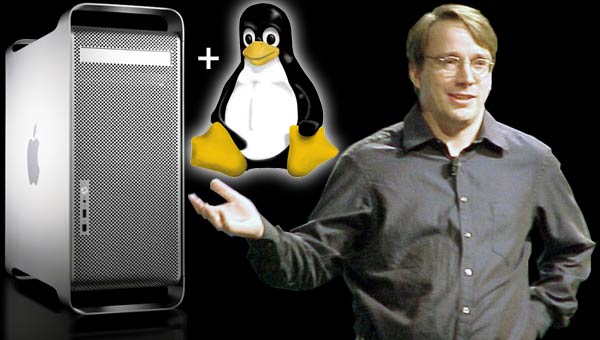
Linus Torvalds - Godfather of Open Source


Linus Torvalds was just 21 when he changed the world. Working out of his family's apartment in Helsinki in 1991, he wrote the kernel of a new computer operating system called Linux that he posted for free on the Internet — and invited anyone interested to help improve it.

Today, 15 years later, Linux powers everything from supercomputers to mobile phones around the world, and Torvalds has achieved fame as the godfather of the open-source movement, in which software code is shared and developed in a collaborative effort rather than being kept locked up by a single owner.

Some of Torvalds' supporters portray him as a sort of anti-Bill Gates, but the significance of Linux is much bigger than merely a slap at Microsoft. Collaborating on core technologies could lead to a huge reduction in some business costs, freeing up money for more innovative investments elsewhere. Torvalds continues to keep a close eye on Linux's development and has made some money from stock options given to him as a courtesy by two companies that sell commercial applications for it.

But his success isn't just measured in dollars. There's an asteroid named after him, as well as an annual software-geek festival. Torvalds' parents were student radicals in the 1960s and his father, a communist, even spent a year studying in Moscow. But it's their son who has turned out to be the real revolutionary.More>>